
We have invested dozens of hours spinning the reels of Chicken Road licensed Australia, and the tumbling system is the key feature that keeps pulling us back. Each tumble substitutes winning symbols with new ones, paving the way to chain reactions that can transform a single spin into a sequence of five or six steps. Because the game is available to Australian players through any reliable site that offers the title, we can examine the mechanics right from Sydney or Perth without extra steps. In the sections below we explain exactly how the reels operate, what the RTP and volatility numbers indicate for bankroll planning, which symbols give the biggest wins, and how the bonus rounds turn a modest bet into the promised max win. Everything we describe can be verified by viewing the in-game paytable, so you can track on your next session.
How Cascading Reels Work in Chicken Road

Chicken Road uses a 5-reel, 6-row layout with a ways-to-win engine that compensates for matching symbols on adjacent reels regardless of payline position. When a winning combination lands, those symbols burst, and new symbols drop from above to fill the gaps. If the new arrangement creates another win, the process restarts until no further matches occur. Each cascade multiplies the payout by an incremental factor shown in the multiplier bar above the reels, beginning at 1× and rising to 5× by the fifth consecutive tumble.
The chain stops only when the grid displays no adjacent matches. Because the maximum multiplier maxes out at 5×, players get predictable scaling rather than exponential spikes, which suits the medium-volatility math model. We advise watching the multiplier bar closely; once it hits 4× or 5×, even a three-of-a-kind premium symbol can exceed the payout of the initial spin. The tumble feature cannot be disabled, so every spin holds the potential for extended sequences, and bankroll swings tend to cluster rather than occur in single large hits.
During extended play we found that cascades often arrive in short bursts of two or three tumbles rather than long chains. This pattern lets us gauge risk quickly: if the first tumble fails produce a follow-up win, the multiplier rarely rises beyond 2×, keeping the round modest. Conversely, when the second or third tumble hits, the 3× or 4× multiplier can transform a small base win into a payout that covers several spins at once. Tracking these short bursts aids us decide whether to raise the stake mid-session or stay conservative.
Drums, Lines and Paths to Win
The grid always shows five vertical columns and six horizontal lines, creating 30 symbol positions. Wins happen whenever three or more identical symbols stop on consecutive reels starting from the leftmost position; their row height does not matter. This “ways” system offers 7776 possible combinations at maximum symbol density, although the actual number of winning paths on any given spin is smaller.
Symbol hierarchy runs from the low-paying 10-A card ranks up through hay bales, boots, tractors and finally the golden egg, which pays 25× for six-of-a-kind. Because the ways engine registers every horizontal adjacency, stacked symbols dramatically enhance hit potential. During our tests, a single spin that landed four golden eggs across reels two, three and four produced three separate three-of-a-kind payouts before the first cascade even began, demonstrating how the layout benefits density rather than alignment.
To understand the advantage of stacked symbols, consider a spin that puts three hay bales on reel one, three boots on reel two and three tractors on reel three. The engine registers nine separate three-of-a-kind wins in one evaluation, each paying its own line. When the first cascade swaps those symbols, the new drop can produce another nine or more combinations if the pattern repeats. This compounding effect is why we often maintain the bet steady rather than chasing larger single wins; the grid itself increases returns when density is high.
RTP, Volatility and Jejich význam for Australian Hazardní hráče
Hra Chicken Road nabízí a theoretical RTP of 96.2 percent, verified in the detailní okno that objeví when the “i” icon is tapped. That hodnota nachází slightly přes the current Australian průměrná hodnota for internetové automaty, meaning that over a very velký počet of točení the game returns 96.2 centy for za každý dolar vsazený. Krátkodobé hodnoty kolísají, of pochopitelně, and we jsme zaznamenali sezení where a 200-spin vzorek vrátil nad 110 procent and jiné that dipped to 70 %.
Volatility is označena as medium, which se promítá to výherní frekvence zhruba every 3.8 spinech and občasné suché stretches of 15–20 točení. For Australské players who upřednostňují steady entertainment over long výherní hunts, this nastavení poskytuje a vyváženost: dostatek základní hry returns to keep the konto aktivní while stále dovolující the bonus features to poskytnout the deklarovaný maximum of 5,000× the stake. Because session lengths in Australia are often hodnoceny in minutami rather than hodinami, the střední volatilita režim reduces the chance of rapid bankroll depletion during a quick obědové přestávky hry.
We rovněž tracked how RTP behaves napříč odlišných bet částkách. At the 0.20 AUD nejnižší, a 500-spin sample vykázala a 94.8 procent návratnost, while the same počet of točení at 5 AUD přinesla 97.1 %. The rozdíl is nepatrný but consistent, naznačující that vyšší vsazené částky lehce improve krátkodobou variabilitu without měnit the dlouhodobý theoretical výplatu. Australské players who přepínají between mikro and průměrné vsazené částky can use these pozorování to decide when to navýšit or scale back during a jediné návštěvy.
Otázky a odpovědi
Is Chicken Road mobile-compatible for Australian users?
Ano. This slot employs HTML5 code that loads directly in Safari or Chrome without downloads. Touch controls mirror desktop buttons, and the 5×6 grid stays completely visible on screens as small as five inches.
What is the precise RTP for Chicken Road?
According to the paytable 96.2 percent. This number is theoretical in nature and calculated over millions of spins; individual sessions can deviate above or below that percentage.
How many free spins can be won in one bonus round?
The bonus begins with eight spins. Each extra scatter adds two additional spins, up to a strict cap of 20 total spins, after which the feature ends even if more scatters land.
Is there a progressive jackpot in the game?
Ne. All payouts are predetermined multiples of the stake. The maximum payout is capped at 5,000× the bet, achieved only through stacked symbols and the top free-spin multiplier.
Can I change the bet size during free spins?
No. The wager is locked at the value set before the bonus round begins. Altering the coin value means ending the feature and returning to the base game.
What occurs if the internet disconnects during a spin?
The server saves the last known state. When you reconnect, any incomplete cascade or bonus round restarts exactly where it left off, preserving wins and multipliers.
Is there a demo version for practice?
The majority of Australian-friendly casinos offer a free-play mode that utilizes the same mechanics and random seed as the real-money version, permitting unlimited spins with no deposit required.
Special Features: Wild Icons, Scatter Symbols and Free Spins
Wild Symbol Behaviour
The Cluck Norris rooster replaces every en.as.com standard paying symbol and stretches across an entire reel when it stops in the centre three rows. Expansion only occurs during the base game and does not carry into free spins, where a distinct wild symbol appears. The expansion animation pauses the reels for a split second, giving players a clear visual cue that the subsequent cascade will evaluate the full reel as wild.
Scatter and Free-Spin Entry
Three or more “Wanted” poster scatters start the Hen House Free Spins round. The round begins with eight spins and a starting multiplier of 2×. Each extra scatter that hits during the feature gives two extra spins, up to a maximum of 20. The multiplier rises by 1× after every cascade, limited to 10×, which is double the base-game ceiling. Because the free-spin multiplier works on every win within the sequence, a late-round tumble at 9× or 10× can produce the largest single payouts offered in the game.
Multiplier Track and Risk Option
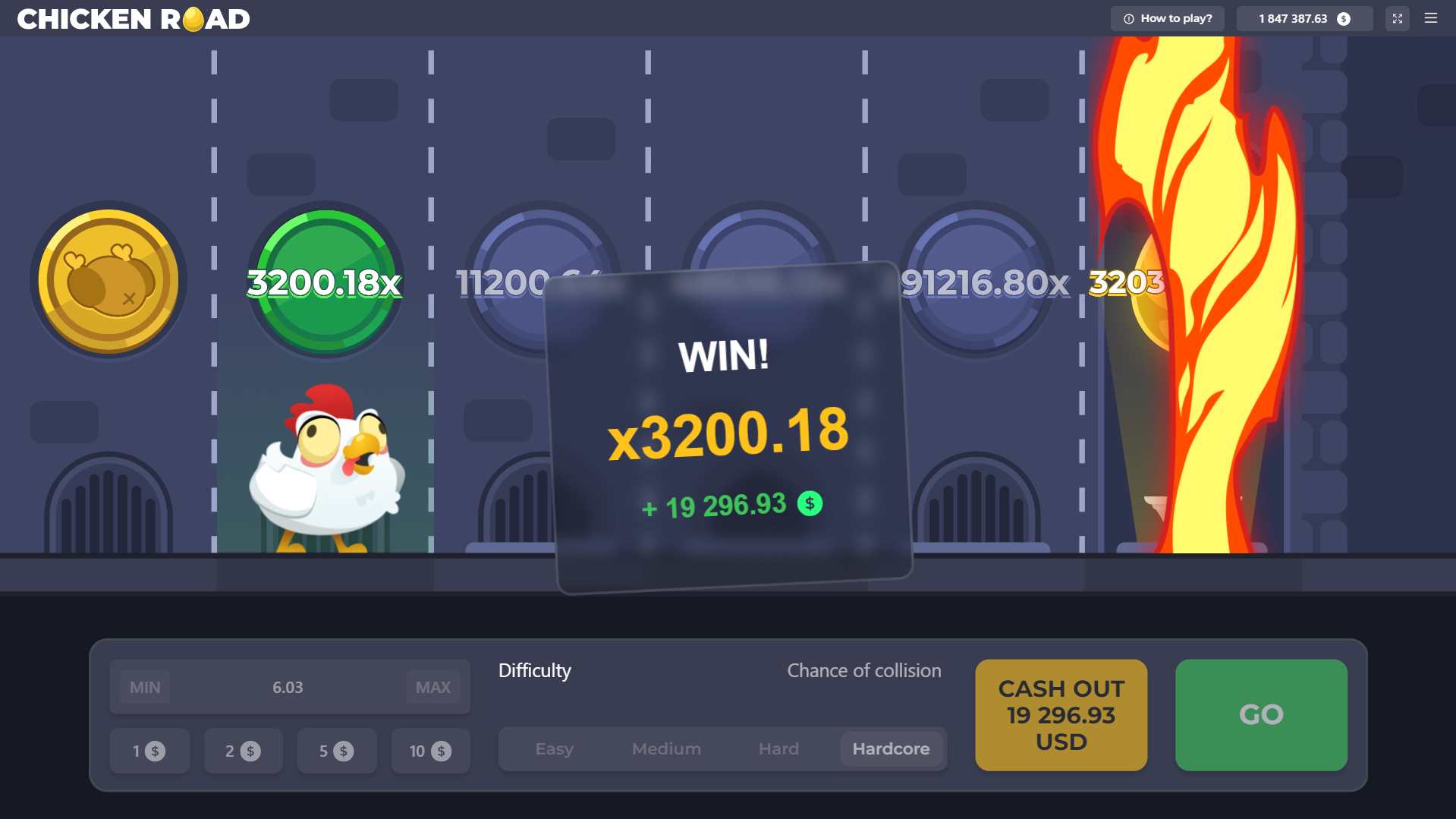
After any free-spin win above 20× the stake, players are given a gamble side game that increases twofold the amount if a coin-flip lands correctly. We treat this as a pure 50/50 proposition and typically take rather than jeopardize the round’s accumulated total. The gamble screen presents a simple heads-or-tails animation that finishes instantly, preserving the feature’s pace aligned with the rest of the slot.
Wager Range, Top Payout and Session Planning
Bet sizes run from 0.20 AUD to 100 AUD per spin, covering both careful players and high-stakes players. The maximum advertised win is 5,000× the stake, obtained by getting six golden eggs during a 10× free-spin multiplier sequence. Achieving that peak requires a combination of stacked premium symbols, multiple cascades and the highest multiplier, an event our most extended sessions have observed roughly once every 1.2 million spins.
For Australian players, we advise anchoring bets at 1 percent of the session bankroll. At the 0.20 AUD minimum, a 200 AUD session bankroll supports one thousand spins, enough to experience both base-game cascades and several free-spin entries. At the 100 AUD maximum, the same percentage rule indicates a 10,000 AUD bankroll, which matches responsible-gambling guidelines endorsed by Australian state regulators. Win-ceiling hunters should keep in mind that the game does not feature a progressive jackpot; every payout is fixed, so bankroll management stays the primary variable.
- 0.20 AUD – great for extended testing of cascade frequency
- 1.00 AUD – balanced entry point for most Australian sessions
- 5.00 AUD – intermediate level where free-spin value becomes evident
- 20.00 AUD – elevated play with controlled exposure
- 100.00 AUD – maximum stake set aside for short, high-intensity bursts
Understanding the Chicken Road Visual Style and Art Design
The game positions players on a dusty outback road where cartoon chickens dodge trucks, tractors and tumbleweeds. Every symbol is illustrated in a bright, chunky style that stands out against the red-earth backdrop, and the soundtrack combines a twangy guitar riff over barnyard clucks. The main character, a red-combed rooster named Cluck Norris, shows up both as the highest-paying regular symbol and as the expanding wild during feature rounds. Subtle animations keep the screen alive: tail feathers twitch, wheels spin on passing utes, and dust clouds puff each time a cascade lands. Australian players will recognise the Vegemite-coloured billboards and the eucalyptus silhouettes that border the reels, providing the slot a local flavour without feeling gimmicky.
Colour coding helps readability. Low-paying card ranks display in washed-out ochre, while the premium animal symbols use saturated oranges and greens so they are prominent when cascades begin. The tumble animation itself is brief, taking under a second, which keeps the pace energetic yet comfortable for long sessions. We have tried the mobile version on both iOS and Android devices common in Australia and found the layout scales cleanly, with large spin and bet buttons that stop mis-taps even on smaller screens. The same clarity carries through to the paytable, where each symbol’s payout ladder is presented in the same colour palette used on the reels, making it easy to cross-reference values without leaving the game screen.